Yearly Archives

2016

Maker Resources

5 Things No One Tells You about Starting a Business

May 17, 2016

*Editor’s note: Whether you’re just starting out or have been running your small business for a while now, you’re probably no stranger to the unexpected challenges that tend to pop up from time to time. Designer, entrepreneur, and author of the book How to Create Your Own Jewelry Line, Emilie Shapiro, shares her advice for working through a few of the trickier things about running a creative business.
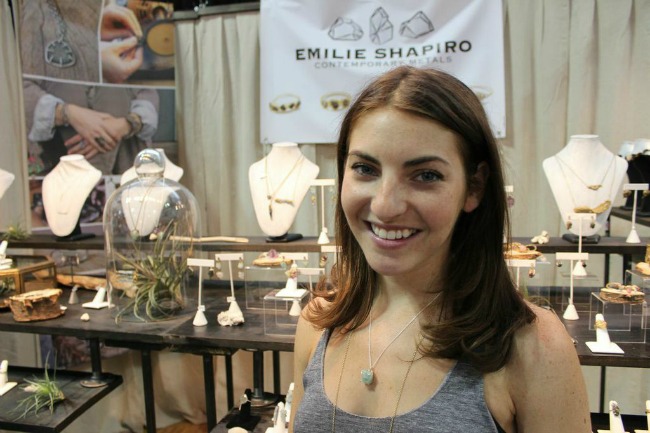
 

Business is the Keyword in Jewelry Business

A business without a goal is just a hobby. Owning a jewelry business is much more than making pretty things. The biggest difference between running a business and engaging in a hobby is the goal; you’re running a business to make money. More and more people are pursuing the life of entrepreneurship and becoming their own bosses. Being a designer and a creator is an amazing gift, but when you decide to become a business owner, your main goal is to make money.

There are a lot of difficult decisions and many hats that you have to wear every day, especially if you are a one woman shop. Accounting, sales, customer service, production management, shipping & handling – all things that are part of running a small business. Running a business is not for everyone. It requires a lot of persistence and ambition. As a craft business owner, you are focusing on efficiency over creativity. Making jewelry is just one small part of running a jewelry business.

As an artist, there is a tendency to make decisions based on feelings and intuition. As a successful businessperson, it is necessary to make decisions based on rational calculation. I like to strike a happy medium between the two.

Continue Reading…

Maker Stories

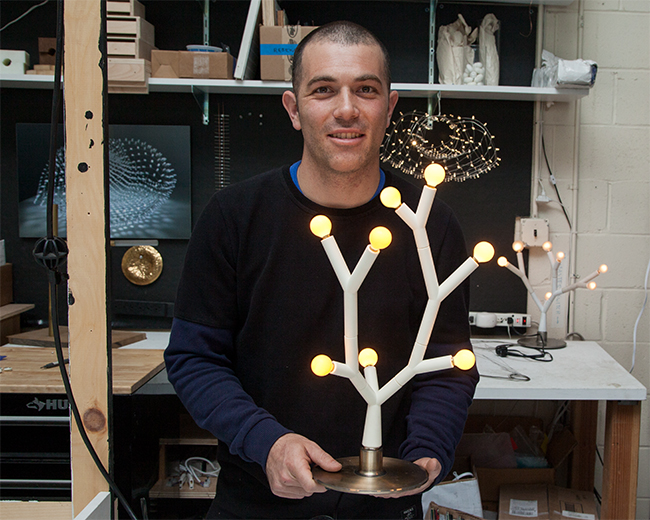
Inside the Maker’s Studio with Splyt Light designer Jason Krugman

May 13, 2016
Splyt Light Designer Jason Krugman

Splyt Light Designer Jason Krugman in his Brooklyn studio, photos by Rachel Orlow

There’s an exciting energy that runs through Jason Krugman’s workspace in the New Lab at the Brooklyn Navy Yard. The open, industrial space fosters cross-pollination of ideas in an environment where science, technology, invention, and art meet. Nearby, an experimental collaborative of architects works on design and material concepts that seem drawn from science fiction—from mushroom bricks to human shelters made from cricket colonies. In the midst of this fantastic innovation, Jason and his partner, Scott Leinweber, created the Splyt Light, an innovative new lighting design that lets consumers build their own unique fixture from a kit of modular parts. We visited Jason’s light-filled space for a look at where Splyt was born, and a conversation about his work sculpting with light and finding ways to share that exhilarating experience with others. Continue Reading…

The Uncommon Life

UncommonGoods for the Common Good

May 13, 2016

While our business has grown a lot since our founding in 1999, UncommonGoods’ commitment to positively impacting the communities we touch has not wavered. If you’ve shopped with UncommonGoods before, you know that being socially conscious is a concept baked right into our company DNA. From founder and CEO Dave Bolotsky meeting with President Obama, to advocating for small businesses, to paying our lowest-paid seasonal workers more than 50% above the federal minimum wage, to advocating for mandated paid family leave in the State of New York, UncommonGoods has been able to successfully champion progressive business practices since from day one. Below are a few choice highlights from our mission in promoting social good.

American Forests

Photo courtesy of our Better to Give partner American Forests

Continue Reading…

The Uncommon Life

Checking in with Better to Give

May 11, 2016

There is a long list of reasons for why I begged to join the UncommonGoods team, but mainly it was my curiosity about our roots as a founding B Corp and our commitment to a creative flagship donation program called Better to Give. (Although, it also didn’t hurt that it is located near top-notch taco joints and the best dim sum and soup dumplings New York City has to offer.) The Better to Give program epitomizes what we strive to do in all aspects of our business. Through the program, we show how to use business as a force for good, while offering all stakeholders an opportunity to express themselves through digital advocacy for organizations that align with our values and vision.

Better to Give Logo

UncommonGoods | Better to Give

Continue Reading…

Uncommon Knowledge

Uncommon Knowledge: What Game’s Got the Most Moves?

May 11, 2016

16834_uk051116“A computer once beat me at chess, but it was no match for me at kickboxing.”

– Emo Philips

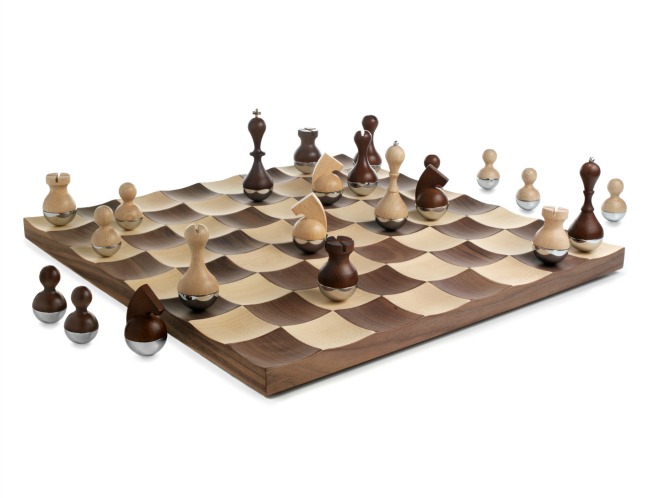
Most amateurs who’ve tried playing chess can agree on one thing: the basic rules aren’t hard to follow, but learning to play well is incredibly difficult. There’s a reason that the “game of kings” is associated with mind-bending strategic thinking, MENSA-level IQs, and supercomputers: the Shannon number—a calculation of all the possible iterations of moves in games of chess. Calculated by mathematician and cryptographer Claude Shannon in 1950 for a study on teaching a computer to play chess, the Shannon number is between 10^111 and 10^123. Incredibly, that’s substantially larger than the number of atoms in the known universe—a mere 10^81. It’s no wonder the game is a nail-biting brain teaser.

Bonus: also in 1950, Shannon invented Theseus, a magnetic mouse. Named for the maze-running hero of Greek mythology, Theseus was programmed to “learn” to navigate mazes, and may be the first rudimentary form of artificial intelligence.

Wobble Chess Set | $250

Maker Resources

4 Tips for Responsible Materials and Supplier Sourcing

May 10, 2016

How to Take the Leap from Maker To Business Owner

As the Senior Production Manager here at UncommonGoods, my job is to oversee the connection of design ideas with manufacturing resources to create new products.

Thomas Edison claimed that genius is one percent inspiration and ninety-nine percent perspiration. From my experience, product development warrants a formula of its own. To carry an idea through to a finished product you should start with a spark of inspiration, then add in equal parts diligence and thoughtfulness, especially when it comes to sourcing.

I’ve pulled together the following considerations for responsible material and supplier sourcing inspired by my experience partnering with our makers on new product development. I hope these thoughts will help other small business owners navigate the rough waters of sourcing.

Continue Reading…

Uncommon Knowledge

Uncommon Knowledge: What’s the Gold Standard for Sushi?

May 9, 2016

41752_uk050916As much a fine art as a cuisine, Japanese food can be a pricey proposition. Sushi in particular inspires chefs to go to great lengths, pushing the envelope of freshness, presentation, and…price. Sure, the ingredients can be expensive, and sushi preparation isn’t exactly cooking 101, but unusual and extravagant preparations also add a premium. Take for example the current record holder for world’s most expensive sushi: nigiri prepared by Filipino chef Angelito Araneta at his Manila restaurant. Wrapped in 24-karat gold leaf and garnished with diamonds, these five pieces of sushi will set you back 91,800 pesos, or nearly $2,000 USD. Yes, that’s about $400 per piece. At that price, you could fly from Manila to Tokyo and enjoy the equally famous (and much more traditional), 20-piece tasting menu at Sukiyabashi Jiro (about $300). The tiny Tokyo establishment—subject of the fascinating documentary Jiro Dreams of Sushi—is often cited as the best sushi in the world, and President Obama seems to agree after dining there on a state visit in 2014. No gold or diamonds at Jiro’s joint; that would just be fishy.

Sushi Board Set | $75

Uncommon Knowledge

Uncommon Knowledge: Where Did the Silhouette Get its Name?

May 8, 2016

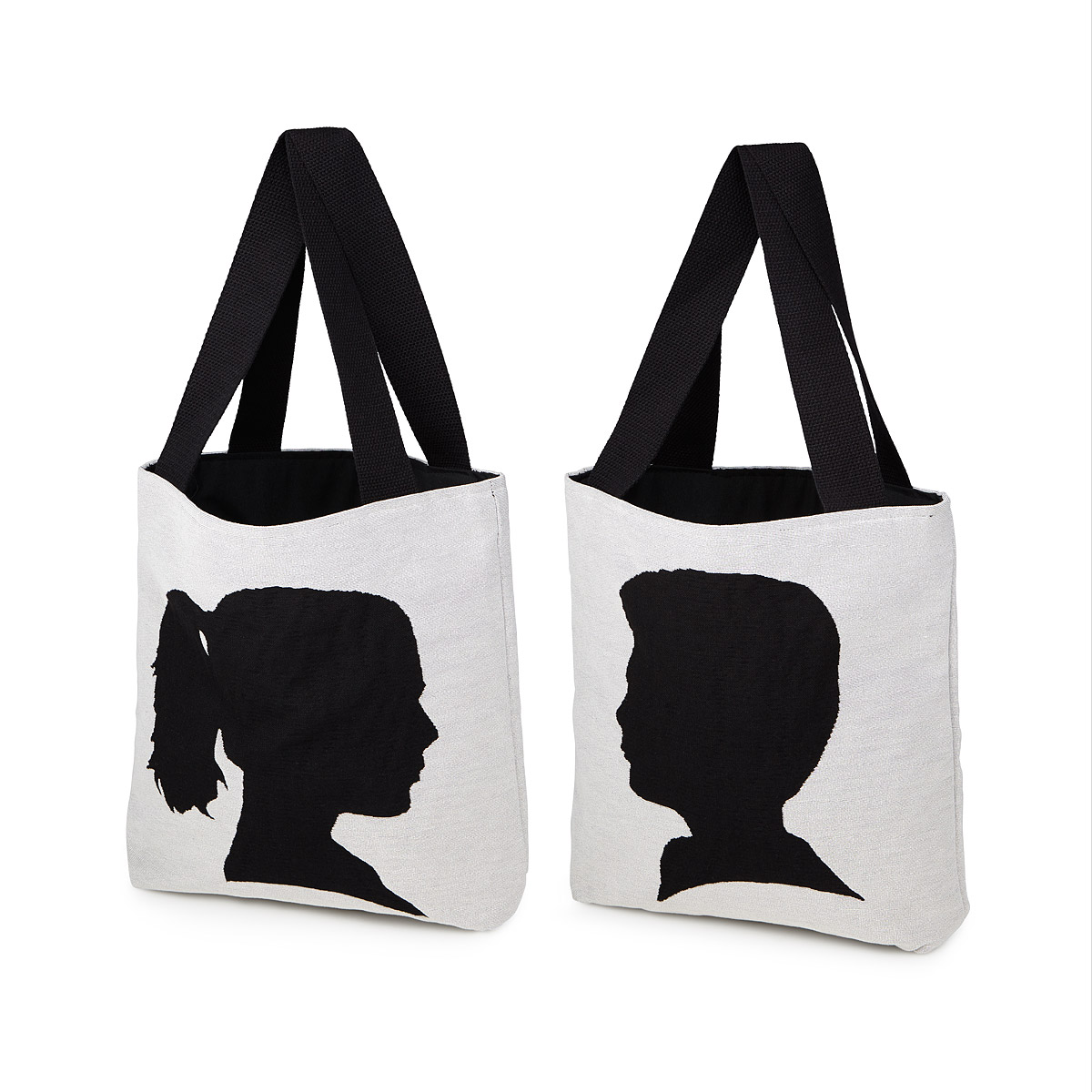
Custom Silhouette Tote | UncommonGoods

Long before selfies, the silhouette was a popular, cheap alternative to formal portraiture like oil paintings or marble busts. From the seventeenth through nineteenth centuries, they were a common way to quickly capture a likeness, preserved today only as souvenirs from spots like Colonial Williamsburg. But did you ever wonder why they’re called silhouettes instead of “quaint black paper cut-outs often seen over Grandma’s mantle?” Other than that being a mouthful, silhouettes are named for Étienne de Silhouette, a mid-eighteenth century French economist. If this doesn’t make perfect sense, let me profile it for you. A sharp critic of the French aristocracy’s spendthrift ways, Silhouette’s conservative economic approach became synonymous with “cheap” in his day, making silhouette shorthand for chintzy things, including cut paper portraits. While this is the most plausible theory of the association, it might also be based on the brevity of Silhouette’s tenure (less than a year), reflecting the short sitting required for a silhouette. It’s also suspected that Silhouette himself was a weekend silhouette maker, so his hobby was named for him. In any case, that’s the outline of this quirky history.

Custom Silhouette Tote | $100